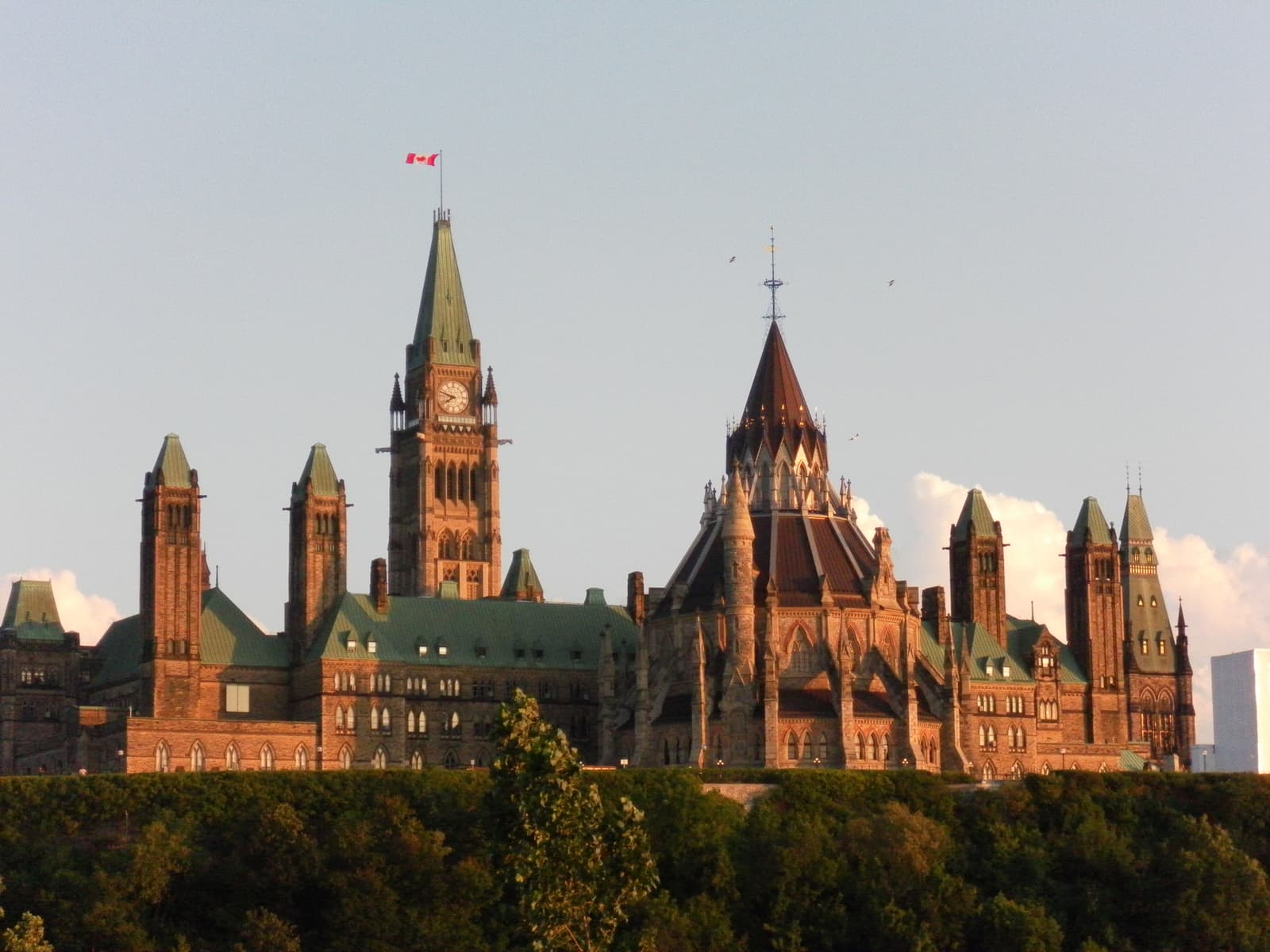
Canada is a beautiful country located on the continent of North America. Extending from the Atlantic Ocean in the east, the Pacific Ocean in the west, to the Arctic Ocean in the north, and sharing a border with the United States of America in the south (Canada: Introduction, n.d.), it encompasses ten provinces and three territories, from the western provinces such as Alberta and British Columbia, to the Maritime provinces like Newfoundland and Labrador and Nova Scotia.
Canada runs a parliamentary democracy system. The federal government, also known as the federal parliament, is centred in the nation's federal capital, Ottawa, a city in Ontario. According to Statistics Canada, the Canadian government governs about 41.4 million people. A part of this population includes the Native peoples of Canada, known as the Indigenous, which includes tribes like the Anishinaabe, Chonnonton, and Haudenoshaune peoples.
The Government of Canada
Canada has three levels of government. These include the federal government, the provincial/territorial government, and the municipal government. These levels of government all have different responsibilities, yet work together as a team towards nation-building.
Let's talk about these three levels of government.
The Federal Government
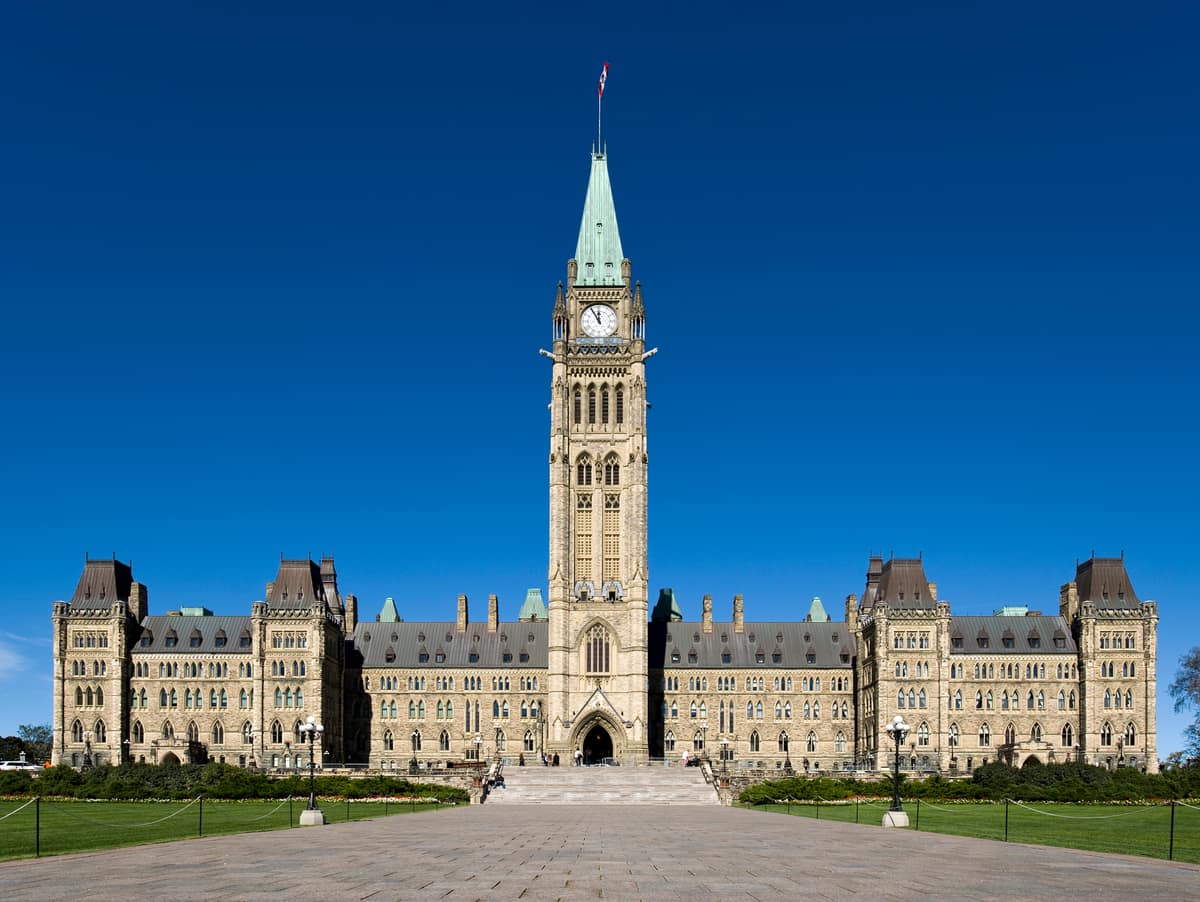
The federal government includes the House of Commons, consisting of 338 Members of Parliament (MPs) from every province and territory, the Senate (made up of Senators chosen by the Prime Minister), and the Monarch, represented by the Governor General. (Legislative Assembly of Ontario, n.d.)
The federal government is formed by the political party that elects the highest number of MPs. The leader of this political party becomes the Prime Minister. (Legislative Assembly of Ontario, n.d.)
The federal government is responsible for:
- Citizenship and passports
- Criminal law
- Currency
- Federal taxes
- Fisheries
- Foreign affairs
- Indigenous lands and rights
- National defense
- Official languages
- Postal service
- Telecommunications policy
- Veterans affairs
- Parks Canada (national parks)
(Elections Canada's Civic Education, n.d.)
The federal government is very important in charge of the security of the nation, in which the Royal Canadian Mounted Police (RCMP) plays a major role.
The Provincial/Territorial Government
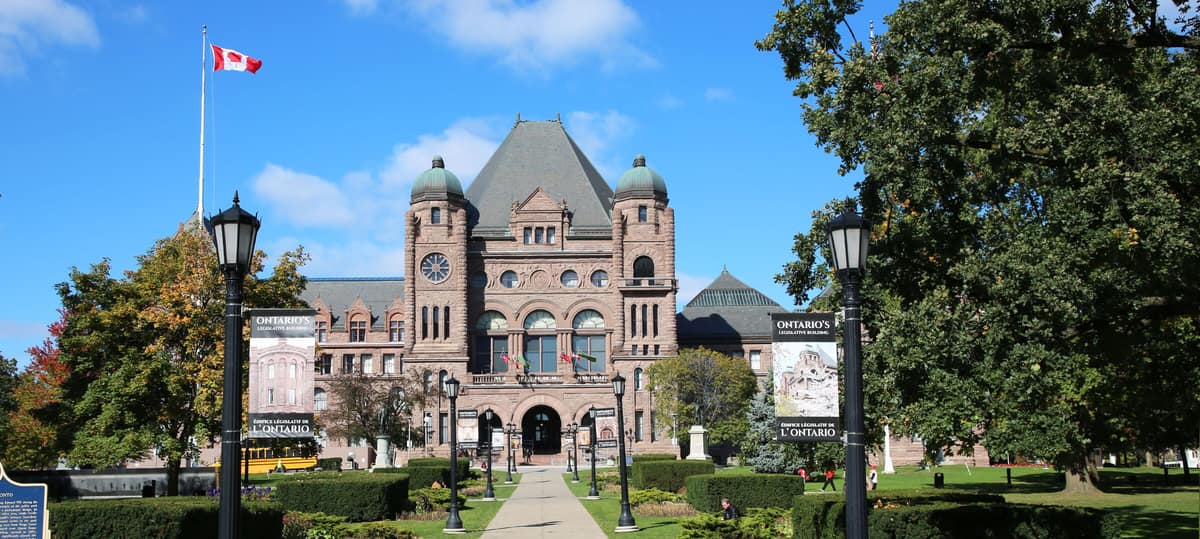
Each province or territory has its own provincial or territorial government. For Ontario, the provincial government is located in Ontario's capital, Toronto.
As stated by the Legislative Assembly of Ontario, Ontario's parliament consists of 124 elected representatives called Members of Provincial Parliament (MPPs). Each one of these MPPs is a representative of an area of the province. These areas are called ridings.
The leader of the provincial government is chosen by the political party with the highest number of MPPs. This leader is called the Premier. The office of the Premier of Ontario is located in the Ontario Legislative Building, Queen's Park, Toronto.
According to Elections Canada's Civic Education, the provincial/territorial government is responsible for:
- Education (from elementary to post-secondary)
- Hospitals and health care
- Natural resources
- Provincial/territorial law and courts
- Property and civil rights
- Provincial/territorial parks
- Provincial/territorial road maintenance
- Provincial/territorial taxes
- Social services
The Municipal Government
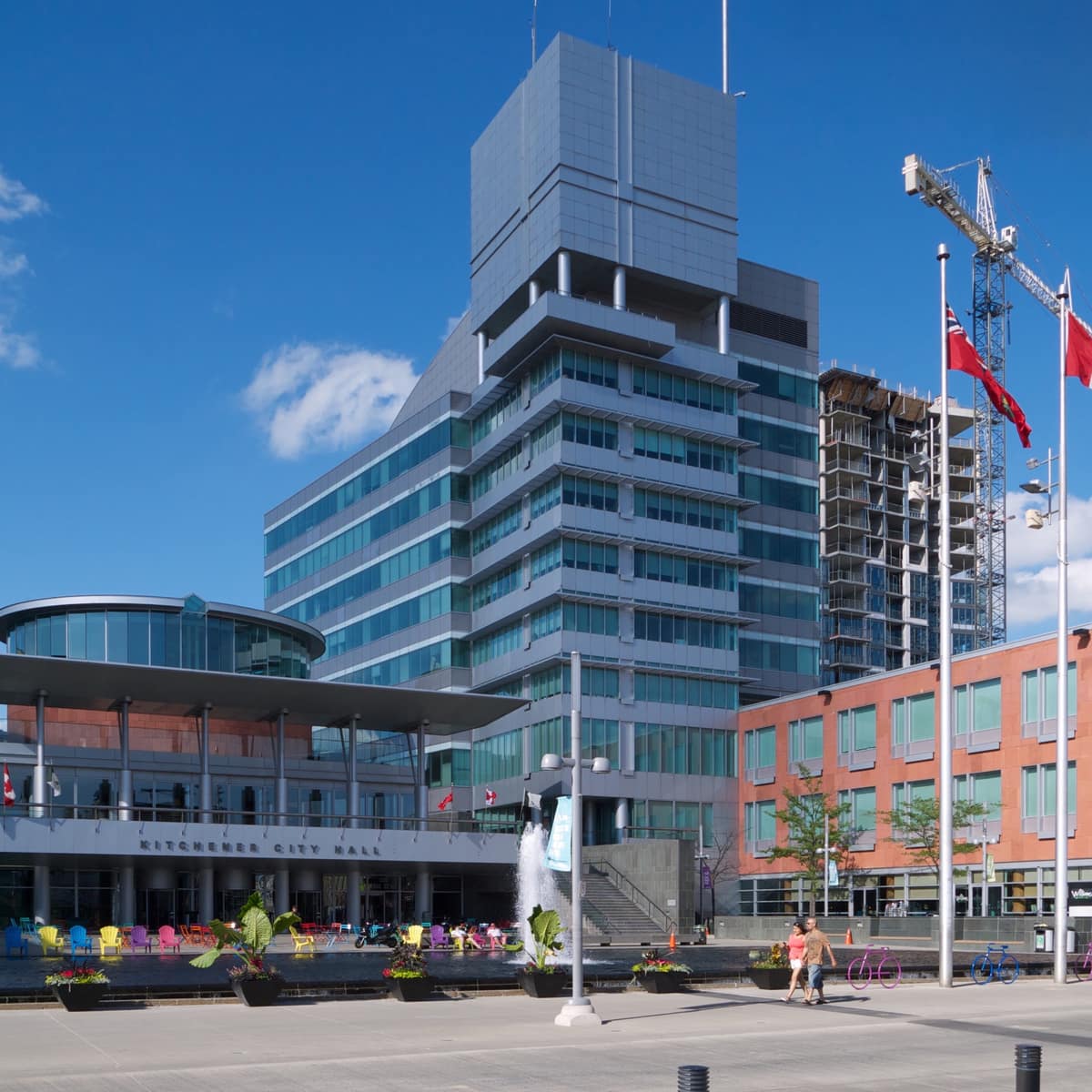
The responsibilities of a municipal government are determined by the provincial government. A city or town council decides on bylaws that deal with issues related to their community. Each councillor represents a sub-division or neighbourhood (generally referred to as a ward) within a city or town.
It is worth noting that these councillors have the most direct contact with the citizens. This allows them to gather information from the people in their communities and pass this information onward to higher levels of government.
Municipal governments are led by mayors in cities and towns, while villages and townships are led by reeves. (Legislative Assembly of Ontario, n.d.)
As stated by Elections Canada's Civic Education, the responsibilities of the municipal government include:
- Animal control
- Community centres
- Fire protection
- Land use planning (zoning)
- Local parks
- Local police
- Local road maintenance
- Public transit
- Recreation and community facilities
- Waste management
- Water supply and treatment
Leadership of Indigenous Tribes
As stated in the introduction, the Native peoples of Canada, referred to as the Indigenous peoples, are made up of various tribes and clans, which are led by chiefs. These chiefs hold high positions of authority in their communities. They also serve as links between their communities and the municipal, provincial, and federal governments. (Canada: Introduction, n.d.)
Through working with these chiefs, the federal government is able to make policies and provide funds that help to address the important needs in Indigenous communities (especially those in remote towns and cities in Canada). Some of these concerns include public health, education, land sovereignty (including farming and fisheries).
To Conclude
Canada has three levels of government, including the federal parliament, provincial/territorial parliaments, and municipal governments. They collaborate to keep Canada working. For instance, through economic policies, funds are distributed by the federal government to the various provinces and territories, which in turn distribute funds to their various municipalities.
The Indigenous peoples also have their needs addressed through continuing consultations between their chiefs and the government.
And so, the different levels of government help curate Canada, the true north, strong and free!